Pacific fisheries step up digital tools for stronger monitoring, compliance and enforcement
Fisheries monitoring, compliance and enforcement practitioners from Members of the Pacific Islands Forum Fisheries Agency (FFA) are gathered in Nadi, Fiji, this week to advance a suite of digital systems supporting fisheries monitoring, compliance and enforcement across the Pacific.
Jointly funded by New Zealand through its Sustainable Fisheries Programme (SPF) and through the Pacific–European Union Marine Partnership (PEUMP II) programme, 40 participants from 14 Members are attending the Second FFA Monitoring, Control and Surveillance Related Activity Workshop (MCSRAW2) from 22–26 June 2026.
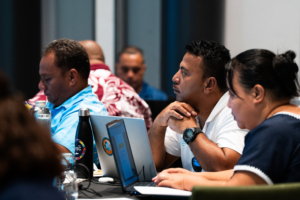
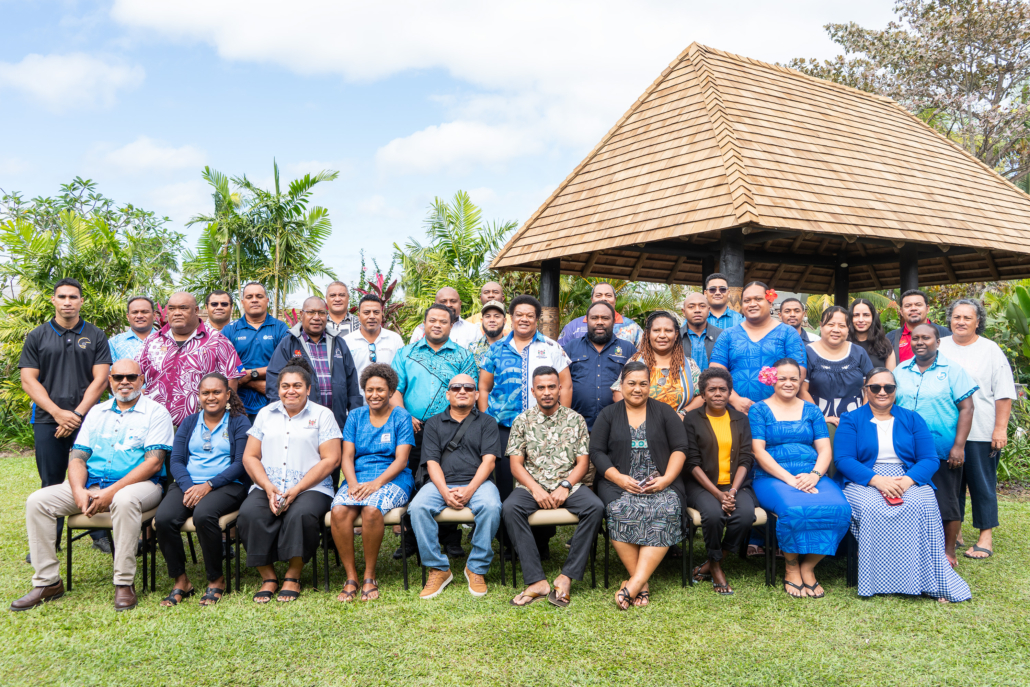
Participants of the Second FFA Monitoring, Control and Surveillance Related Activity Workshop. Photo: FFA
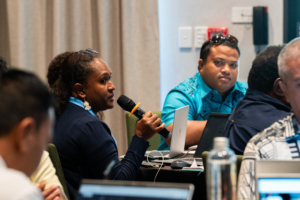
Participants of the Second FFA Monitoring, Control and Surveillance Related Activity Workshop. Photo: FFA
The workshop supports the implementation of priorities agreed at the 29th Regional MCW Working Group (MCSWG29) meeting held in March earlier this year and contributes to the delivery of the FFA Regional Monitoring, Control and Surveillance Strategy (RMCSS) 2024-2029.
Among the key fisheries initiatives being progressed is FFA’s electronic Port State Measures (e-PSM) system, launched in 2024 and fully operational since 2025. The system strengthens port inspection and monitoring processes, and information sharing across the FFA Membership to combat illegal, unreported and unregulated (IUU) fishing.
Participants will revisit the development of a regional electronic Catch Documentation Scheme (e-CDS), aimed at improving the traceability and verification of fish products throughout the supply chain. They will also discuss the draft electronic fisheries licensing data standards designed to improve the consistency and exchange of licensing information across the region.
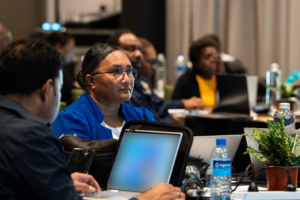
Participants of the Second FFA Monitoring, Control and Surveillance Related Activity Workshop. Photo: FFA

Participants of the Second FFA Monitoring, Control and Surveillance Related Activity Workshop. Photo: FFA
In addition, the workshop will provide training on the Online Dashboard, which enables Members to monitor and track implementation progress against the FFA RMCSS 2024 – 2029.
FFA Monitoring, Control and Surveillance Policy Advisor, Jason Raubani, said the workshop provides an important opportunity for the FFA Secretariat to work directly with Members and support the implementation of key MCSWG29 meeting outcomes and regional compliance and enforcement initiatives under the RMCSS 2024- 2029.
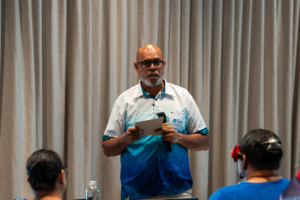
FFA MCS Policy Advisor, Jason Raubani. Photo: FFA
“The MCS Related Activity Workshop provides a practical platform for the Secretariat to work alongside Members and provide direct technical support on key regional compliance and enforcement initiatives outlined under the FFA RMCSS 2024- 2029. By bringing practitioners together, we can deliver hands-on training, gather feedback and help Members get the most value from the systems and tools that support their national work that aligns with the Strategy.”
“The discussions throughout the week will help determine future improvements to these regional systems while ensuring they continue to meet the operational needs of Members,” Mr Raubani said.
“As fisheries management becomes increasingly digital, it is important that Members are equipped with the tools and knowledge but at the same time get necessary training support needed to make the most of these systems and the information they provide. That collaborative approach is one of the strengths of the Pacific’s regional fisheries monitoring, control and surveillance framework.”
The workshop also reflects a growing interest and investment by FFA Members in the digital systems and technical capacity to support modern fisheries compliance and enforcement. In May, the Forum Fisheries Committee (FFC) agreed for Members to make Electronic Reporting (ER) mandatory through fisheries license conditions, marking a significant step towards full regional implementation of digital fisheries reporting systems.
The workshop follows the inaugural MCS Related Activity Workshop held in Port Moresby, Papua New Guinea in 2025 and continues FFA’s efforts to strengthen regional cooperation, information sharing and operational capacity across fisheries compliance and enforcement programmes.
About NZMFAT Sustainable Pacific Fisheries (SPF) Programme
The New Zealand Ministry of Foreign Affairs and Trade (NZMFAT) Sustainable Pacific Fisheries (SPF) Programme is a regional initiative supporting the sustainable management, development and conservation of Pacific fisheries from 2022 to 2028. Through partnerships with key regional organisations including the Pacific Islands Forum Fisheries Agency (FFA), the Pacific Community (SPC), the Western and Central Pacific Fisheries Commission (WCPFC) and New Zealand’s Ministry for Primary Industries, the programme works to strengthen fisheries governance, improve monitoring and compliance systems, build regional leadership and capacity, and maximise the social and economic benefits derived from Pacific fisheries. Climate change resilience, gender equality and social inclusion are integrated across all programme activities.
About PEUMP Phase II Programme
The second phase of the Pacific-European Union Marine Partnership (PEUMP) programme continues to support sustainable oceanic and coastal fisheries management and the development of a healthy and thriving blue economy for improved social, environmental and economic benefits for all Pacific peoples and their future generations.
Through stronger climate-resilient and inclusive ocean governance and fisheries management, PEUMP fosters community-driven, people-centred and integrated ecosystems approaches to enhance the sustainable use of marine resources and ecosystems services at regional, national and community scales.
PEUMP II is financed by the European Union ensuring continuity of phase 1 achievements while responding to the region’s renewed priorities and needs. Phase 2 began in January 2026 with a four-year implementation timeline benefiting 15 countries: Cook Islands, Federated States of Micronesia, Fiji, Kiribati, Nauru, Niue, Palau, Papua New Guinea, Republic of the Marshall Islands, Samoa, Solomon Islands, Timor-Leste, Tonga, Tuvalu and Vanuatu.
NADI, 23 June 2026
| Media Contacts: Emily V. Moli FFA Communications Manager e: [email protected] Ernest Ta'asi FFA Communications Officer e: ernest.ta’[email protected] Priscilla Ragu FFA Communications Officer e: [email protected] |  |
| About Pacific Islands Forum Fisheries Agency (FFA) FFA assists its 17 Members to sustainably manage fishery resources that fall within their 200-mile Exclusive Economic Zones (EEZs). FFA provides expertise, technical assistance and other support to its members who make decisions about their tuna resources and participate in regional decision making on tuna management. Find out more here: www.ffa.int |
|
 Photo credit: Fiji Navy