
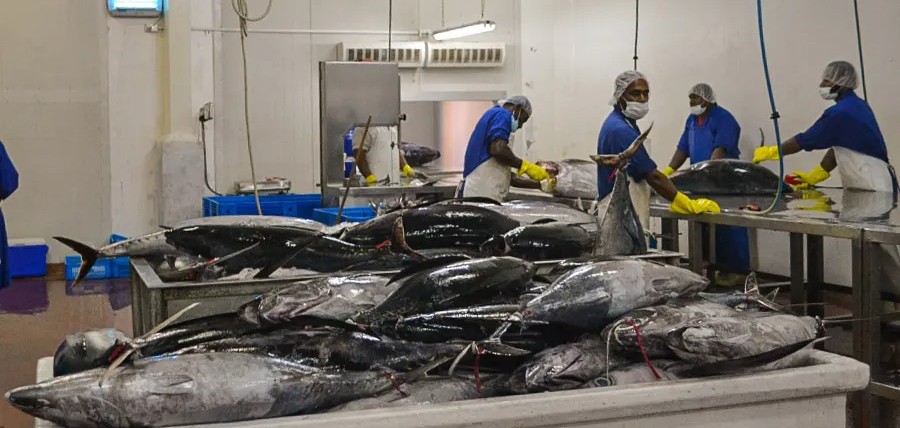
South Pacific Albacore: Building a Sustainable Future for a Pacific Lifeline
South Pacific albacore is one of the Pacific region’s most valuable tuna resources, underpinning domestic longline fisheries, supporting thousands of livelihoods, and contributing significantly to food security and national economies. For many Pacific Island countries, particularly those south of the equator, the fishery is a vital source of employment, government revenue, and economic opportunity.
Recognising its importance, Pacific Island countries have spent years working together to strengthen the long-term management of this shared resource. That commitment reached a historic milestone in December 2025 when the Western and Central Pacific Fisheries Commission (WCPFC) adopted the South Pacific Albacore Management Procedure during its 22nd Regular Session in Manila, Philippines. The proposal, led by Members of the Pacific Islands Forum Fisheries Agency (FFA), established the first long-term, science-based harvest strategy for the fishery.
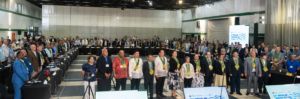
Delegates of the 22nd Regular Session of the Western and Central Pacific Commission (WCPFC) in the official group photo during the opening of the meeting on Monday 1 December 2025. Photo: FFA
The Management Procedure introduces a structured decision-making framework that uses scientific data to determine appropriate fishing levels based on the health of the stock. It relies on pre-agreed harvest control rules to ensure that management decisions are consistent, transparent, and responsive to changes in the fishery, reducing the need for difficult negotiations during periods of uncertainty.
While the adoption of the Management Procedure marked a significant achievement, it represents only one part of the broader fisheries management framework. Attention has now turned to developing the Implementing Arrangements (IA), which will establish the practical rules needed to put the Management Procedure into operation. These arrangements will define how participating countries coordinate implementation, including the operational measures required to achieve the agreed management objectives.
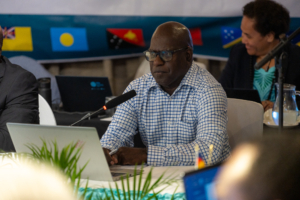
FFA Director of Fisheries Management, Ludwig Kumoru. Photo: FFA
“The adoption of the South Pacific Albacore Management Procedure was a landmark achievement for our region, but its success ultimately depends on how effectively we implement it,” said FFA Fisheries Management Director Ludwig Kumoru. “The Implementing Arrangements will provide the practical framework that turns scientific advice into coordinated management action. They will give our Members greater certainty, strengthen accountability, and ensure that the benefits of this important fishery continue to flow to Pacific communities while safeguarding the resource for future generations.”
The journey to this point reflects years of technical collaboration, scientific analysis, and regional dialogue. FFA Members have been at the forefront throughout the process, demonstrating unity in their vision to ensure that South Pacific albacore continues to deliver sustainable economic returns.
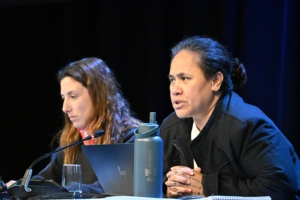
FFA Fisheries Management Advisor Joyce Samuelu-Ah Leong (right) contributes to the sustainable management of South Pacific albacore, supporting regional cooperation and science-based fisheries management. On the left is FFA’s Fisheries Management Advisor – Climate Change, Marina Abas at the first SPA Meeting, June 2026 in Wellington New Zealand. Photo: FFA.
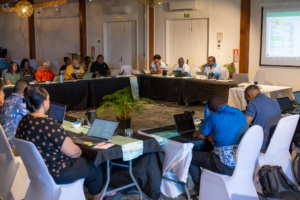
FFCMIN24 – South Pacific Albacore (SPA) Meeting, July 2025. Photo: FFA
FFA Ministers have endorsed the FFA South Pacific albacore Allocation Agreement which binds each Member south of the Equator to an in-zone allocation for South Pacific albacore. This is a significant achievement – one that reinforces the Pacific’s leadership in fisheries governance. By combining adopted science-based management with regional cooperation, FFA Members are demonstrating how shared resources can be managed responsibly while recognising the unique development needs of Small Island Developing States.
“This achievement demonstrates what Pacific regionalism can accomplish,” said Mr Kumoru.
“By working together, our Members have shown that collaboration and a shared vision can deliver world-leading fisheries management. The South Pacific albacore fishery is more than a resource – it supports livelihoods, food security, and economic resilience across our region. Through continued cooperation, we are ensuring that Pacific Island countries remain at the forefront of sustainable fisheries management and that future generations inherit a healthy and productive ocean.”
As discussions continue on the Implementing Arrangements, Pacific countries remain focused on translating the Management Procedure into practical action. Together, these complementary measures will provide a stronger foundation for sustainable fisheries management, helping ensure that South Pacific albacore continues to support Pacific communities, economies, and future generations for decades to come.
| Media Contacts: Emily V. Moli FFA Communications Manager e: [email protected] Ernest Ta'asi FFA Communications Officer e: ernest.ta’[email protected] Priscilla Ragu FFA Communications Officer e: [email protected] |  |
| About Pacific Islands Forum Fisheries Agency (FFA) FFA assists its 17 Members to sustainably manage fishery resources that fall within their 200-mile Exclusive Economic Zones (EEZs). FFA provides expertise, technical assistance and other support to its members who make decisions about their tuna resources and participate in regional decision making on tuna management. Find out more here: www.ffa.int |
|