

FFA Annual Report: A New Chapter for Pacific Fisheries
The Pacific Islands Forum Fisheries Agency (FFA) has released its 2024–2025 Annual Report, highlighting a year of strong regional cooperation, meaningful achievements and continued leadership in sustainable fisheries management across the Blue Pacific.
The report marks an important milestone for the Secretariat. It is the first Annual Report presented by Director-General Noan David Pakop and comes as FFA prepares to embark on a new Strategic Plan that will help shape its work over the next five years.
It also comes at a time when the Pacific is facing some of its biggest challenges – from climate change and changing tuna distribution to increasing pressure on ocean resources and a rapidly evolving geopolitical landscape.
Yet, if the past year has shown anything, it is that regional cooperation remains one of the Pacific’s greatest strengths.
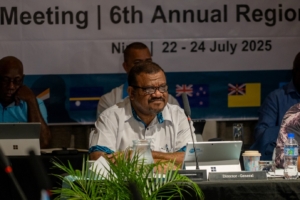
FFA Director-General Noan David Pakop at the FFC Officials Meeting in Niue 2025. Photo: FFA
For almost five decades, FFA Members have shown what can be achieved when Pacific countries work together. That partnership has helped protect the world’s largest tuna fishery, strengthen the region’s influence in international fisheries management and deliver lasting benefits for Pacific people.
This past year was another reminder of what that cooperation can achieve.
The Pacific’s four key tuna stocks remain healthy, with Members continuing to make important decisions that will protect them well into the future. New Target Reference Points for Skipjack and South Pacific Albacore were adopted, while work continued on harvest strategies for Bigeye and Yellowfin tuna. Behind those technical decisions is something much simpler – the shared responsibility of ensuring Pacific tuna continues to support future generations.
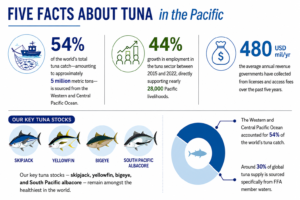
Pacific Power: A 20-Year Journey of Regional Leadership in Tuna Fisheries
But healthy tuna stocks are only part of the story.
As Director-General Noan David Pakop reflects in his first Annual Report, the next challenge is making sure the benefits from those fisheries stay in the Pacific. While the Pacific region supplies more than half of the world’s tuna, much of its value is still realised elsewhere. Creating more jobs, attracting investment and growing local industries are now just as important as protecting the resource itself.
That thinking is already shaping FFA’s work.
Across the region, Members continued strengthening market access, improving labour standards and supporting initiatives that encourage more value-added processing and investment. The East New Britain Initiative (ENBi) is one example of that shift – looking beyond fisheries management to how tuna can create broader economic opportunities for Pacific communities.
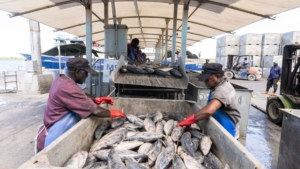
Tuna offloaded from an NFD vessel and directly onto SolTuna’s processing line. Photo: FFA
The year also saw continued progress in protecting the region’s fisheries.
Regional surveillance operations remained a cornerstone of FFA’s work, supported by new technologies such as the Electronic Port State Measures system and the Electronic Vessel Register. Together with stronger national legislation and closer cooperation between Members, these efforts have helped reduce the impact of illegal, unreported and unregulated fishing across the Pacific.
Much of this work happens behind the scenes. It is found in long hours at sea, in negotiations around regional meeting tables, in fisheries officers inspecting vessels, and in the technical advice provided to Members every day. During the reporting period alone, FFA delivered more than 300 Member support activities covering legal advice, fisheries management, monitoring, surveillance, investment and capacity building. These may not always make headlines, but they are essential to helping Members achieve their own national priorities.
Inside the Secretariat, there has also been a renewed focus on ensuring FFA remains fit for purpose.
The Independent Refresh and Performance Review, together with improvements to governance, systems and workforce capability, is helping build a more response, efficient and future-focussed organisation. Increased donor confidence, reflected in a 38 percent growth in funding, provides further recognition of that work.
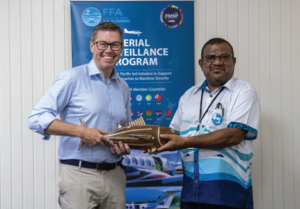
FFA Director-General Noan David Pakop meets with Australia’s Minister for Defence Industry and Minister for Pacific. Photo: FFA
The year ahead will bring no shortage of challenges. Climate change will continue to reshape the region’s fisheries, competition for marine resources will grow and expectations from Members will continue to evolve.
But this Annual Report is also a reminder that FFA has never faced those challenges alone.
Its strength has always come from the willingness of Pacific countries to work together, share knowledge and speak with one voice. That spirit has shaped the Agency for nearly five decades and will continue to guide it as it begins its next chapter.
Ultimately, FFA’s success won’t be measured by the number of meetings held or policies developed. It will be measured by whether Pacific fisheries continue to create opportunities, strengthen livelihoods and improve the lives of Pacific people.
You can access the full report here – https://www.ffa.int/download/ffa-annual-report-2024-2025/
HONIARA, 27 JULY 2026
| Media Contacts: Emily V. Moli FFA Communications Manager e: [email protected] Ernest Ta'asi FFA Communications Officer e: ernest.ta’[email protected] Priscilla Ragu FFA Communications Officer e: [email protected] |  |
| About Pacific Islands Forum Fisheries Agency (FFA) FFA assists its 17 Members to sustainably manage fishery resources that fall within their 200-mile Exclusive Economic Zones (EEZs). FFA provides expertise, technical assistance and other support to its members who make decisions about their tuna resources and participate in regional decision making on tuna management. Find out more here: www.ffa.int |
|